
- Your paid channel has to be private. Keep a free channel alongside it: that’s where your subscribers come from.
- Four ways to get paid: by hand, Telegram Stars, Patreon, or a tool connected to Telegram. Past twenty or so subscribers, managing access by hand turns into a job of its own.
- Price benchmarks: €20–90/month for betting tips or trading, €10–50 for coaching, €3–15 for creator content.
- 100 subscribers at €9.99 leaves you about €910 a month after the Onesub fee and Stripe costs.
Why start a paid Telegram channel?
You already post for free: betting tips, market analysis, workouts, advice. Part of your audience keeps asking for more. A paid channel is the most direct way to make money on Telegram: your subscribers pay every month for what you don’t post anywhere else.
Three reasons it works well on Telegram in particular:
- The income comes back every month. A one-off sale has to be made again. A subscription renews on its own, and each new subscriber adds to the ones you already have.
- Your fans are already there. No new app, no unfamiliar website. Your messages arrive as notifications, like their friends’ messages, instead of getting lost in a feed.
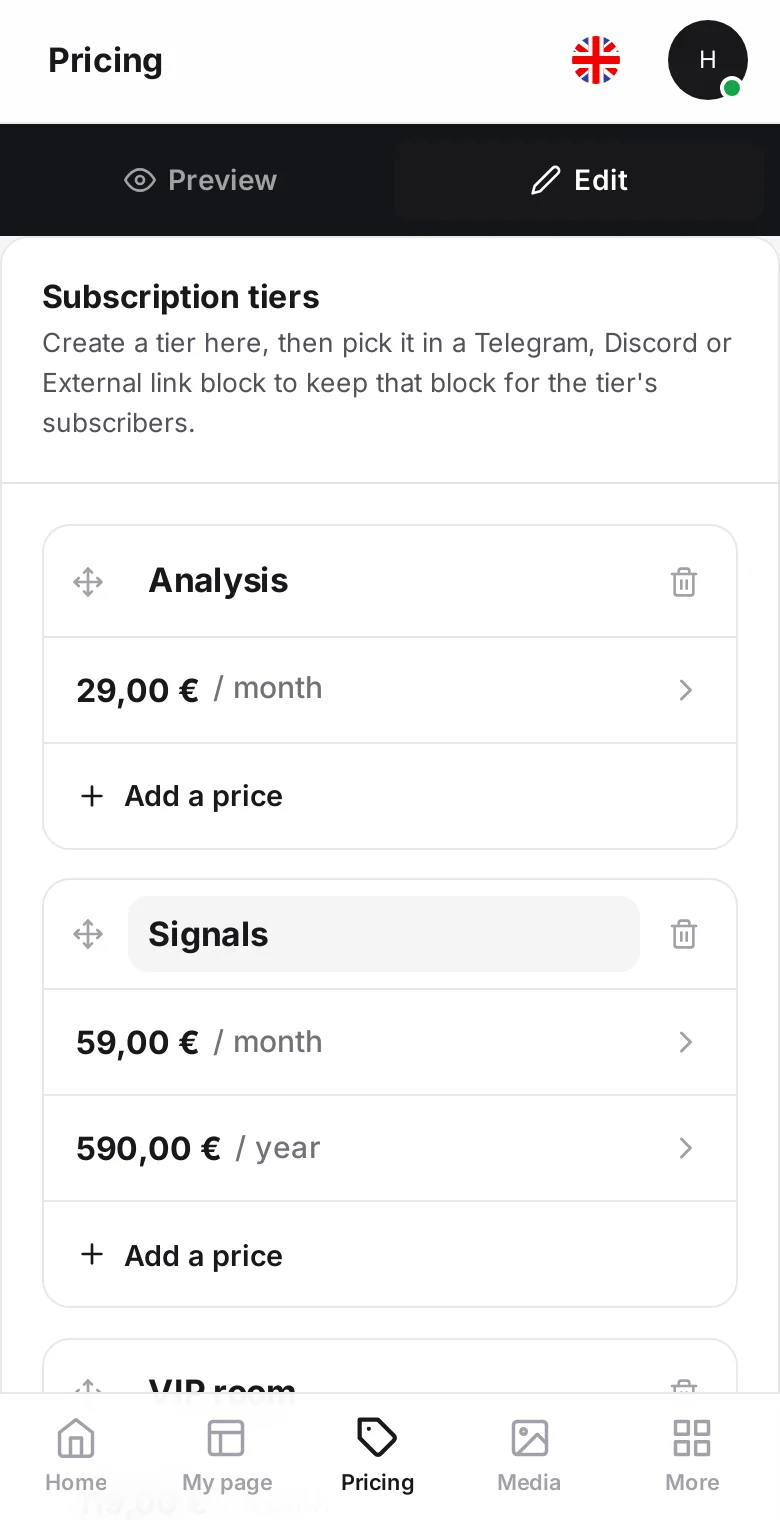
- You don’t need many subscribers. Someone who pays reads everything and sticks around. You don’t need 100,000 followers: 100 subscribers at €10 a month already comes to close to €1,000.
Still weighing up different models? We compared every way to make money on Telegram, scams to avoid included. Running a Discord server instead? Here’s how to monetise a Discord server.
4 ways to monetise a Telegram channel (an honest comparison)
Taking the money is the easy part. The real work is sending the link to every new subscriber and removing the ones who stopped paying. Each option handles that more or less well.
1. By hand (PayPal, bank transfer, home-made bot)
Your subscribers pay you through PayPal or a bank transfer, you send them the invite link, and every month you check who renewed and remove everyone else. Some people automate part of it with a bot they code themselves.
- Pros: no platform fee.
- Cons: it eats your time, every month. Missed renewals pile up, the invite link gets passed around, and PayPal “Friends and Family” isn’t meant for taking payments for sales.
- Best for: testing the idea with a dozen people.
2. Telegram’s native subscriptions (Stars)
Telegram lets you create a paid invite link priced in Stars, its in-app currency. It’s built into the app, so there’s nothing to install.
- Pros: easy to switch on, and Telegram handles access.
- Cons: your subscribers have to buy Stars (often through the App Store or Google Play, which take their cut), monthly is the only option, and you withdraw your earnings in crypto through Fragment, after a waiting period. No sales page, no promo codes, no free trials.
- Best for: testing a small monthly channel with an audience that already buys Stars. As soon as you want to be paid in euros or offer a yearly price, you’ll have to switch tools, and move your subscribers with you.
3. Patreon and donation platforms
Your fans support you every month on Patreon, and you share your channel link with them.
- Pros: well-known platforms that people trust.
- Cons: none of them connect to Telegram. Nobody removes the people who stop paying, so you’re back to doing it by hand. And the fee is higher (around 10% on Patreon for a new creator, before payment fees).
- Best for: creators whose community already pays on Patreon and who treat Telegram as a bonus. To launch a paid channel, a tool connected to Telegram saves you checking payments by hand and takes a smaller fee.
4. A tool connected to Telegram, like Onesub
You create a sales page, link your channel to it, and the rest happens without you: card payment, invite, renewal, and removing members who stop paying.
- Pros: nothing to manage day to day, several plans and prices, promo codes, free trials, and the money goes in euros into your own Stripe account.
- Cons: a 5% fee on the free plan (3% or 1% on the paid plans), plus Stripe fees.
- Best for: creators who want real income from it without spending their evenings on admin.
| Option | Manual | Telegram Stars | Patreon / donations | Onesub |
|---|---|---|---|---|
| Access handled automatically | No | Yes | No | Yes |
| Paid out in euros to your account | Yes | No, in crypto | Yes | Yes |
| Monthly, quarterly, yearly | Whatever you like, by hand | Monthly only | Depends on the platform | Yes |
| Promo codes and free trials | No | No | Depends on the platform | Yes |
| What it costs you | €0 in tools, but a lot of time | App store fees when buying Stars, payout in crypto | ~10% + payment fees | 5% (or 3% and 1% on the €49 or €99/month plans) + Stripe fees |
To test with a few friends, doing it by hand is fine. Stars is enough for a monthly test. If you’re aiming for a regular income in euros, you might as well start on a tool that allows it: moving subscribers later loses some of them. Once you pass twenty or so subscribers, the time spent managing access costs you more than an automated tool’s fee.
Every Onesub plan and its fee is on the pricing page.
Tutorial: create your paid Telegram channel with Onesub, step by step
Allow 5 minutes. You can do all of it from your phone.
The video walkthrough. A worked example from start to finish. The video is in French; the steps below cover the same ground in English. Click a chapter to jump straight to it, or watch it on YouTube.
Step 1: create your Onesub page
Sign up for free and say you want to sell access to a Telegram community. Your page comes pre-filled: add your photo, your description and your colours. Your address will look like your-name.onesub.fr, and visitors can read it in their own language, out of the 6 available.
Step 2: connect Stripe to get paid
Connect your own Stripe account: an ID and your bank details, a few minutes. Every payment goes straight to you, then on to your bank account. Onesub never holds your money.
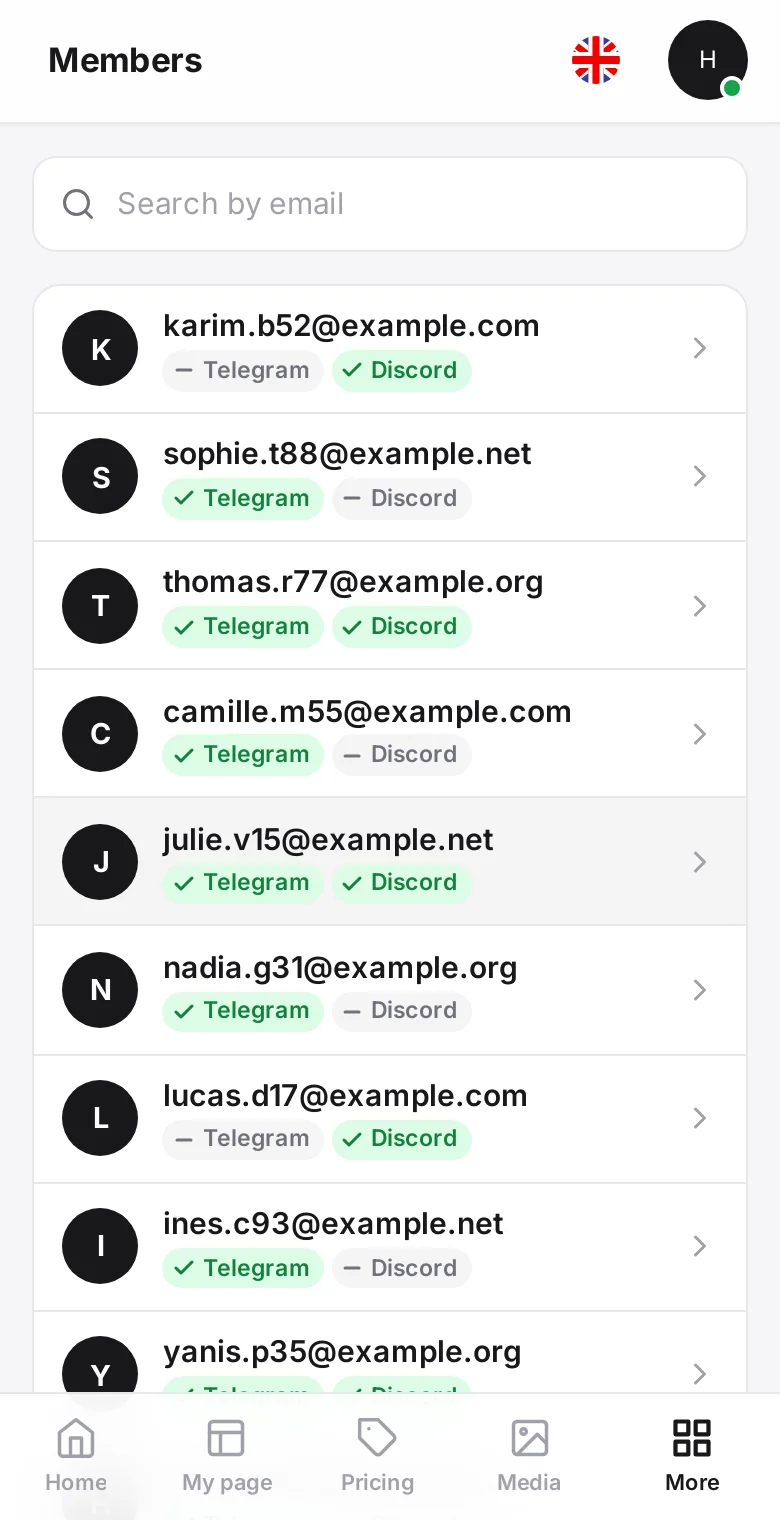
Step 3: set your price and plans
Choose your price and billing period: monthly, quarterly, yearly. You can create several plans (Standard, VIP…), each with its own channel. Add a free trial or a launch promo code to win over people who are hesitating.
Step 4: create your private channel on Telegram
In Telegram, tap the pencil icon, then New Channel. Give it a name that says what’s inside (“VIP Tips”, “Gold Signals”), a photo and a description. Pick Private Channel: that’s what stops anyone getting in without paying. If you want your subscribers to talk to each other, create a group instead: that works too.
Step 5: link your Telegram channel
Add a Telegram block to your page, then add the Onesub bot as an admin of your channel by following the instructions. From then on, each new subscriber gets their invite as soon as they pay, and anyone whose subscription ends is removed. You can link as many channels and groups as you like.
Step 6: share your link
Put your Onesub link in your Instagram, TikTok or YouTube bio, pin it in your free channel, drop it in your stories. When someone pays, you get the notification and they get their access.
What happens after the payment (and when it stops)
This is the part that saves you time every month, so it’s worth knowing exactly how it works.
- Your subscriber pays by card.They pick a plan on your page and pay in a few seconds. The bot sends them their invite to the channel.
- They manage their own subscription.Switching plan, updating their card, cancelling: they do it themselves, without messaging you. If they cancel, they keep access until the end of the period they paid for.
- A payment fails?Stripe retries automatically. If the subscription ends up cancelled, the bot removes them from your channel.
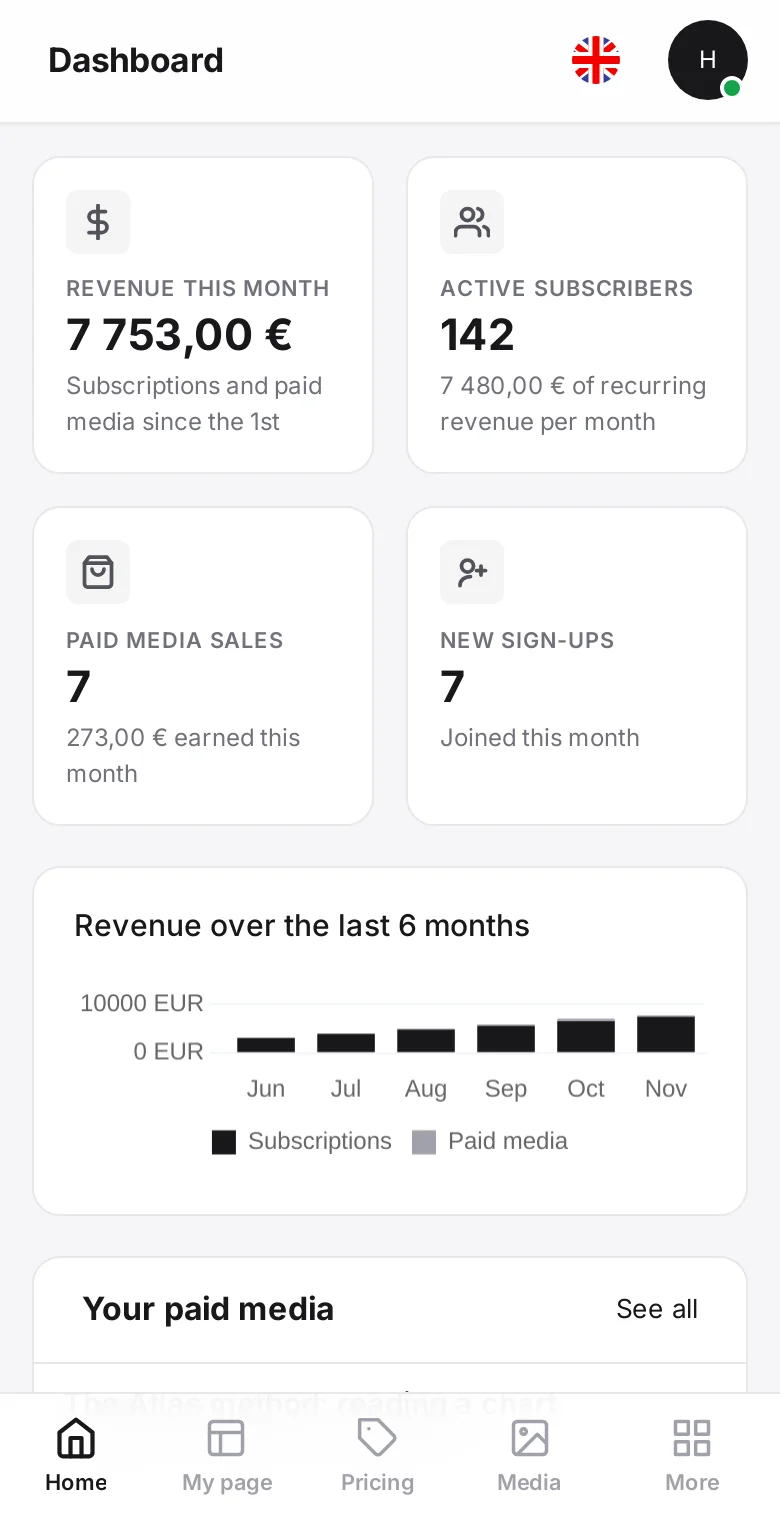
- You see everything in one place.Your member list shows who’s subscribed and whether they’ve actually joined your Telegram channel (or your Discord server).
How much should you charge for a Telegram subscription?
The right price is one your subscribers pay without thinking twice, and that reflects what you give them. Here are some benchmarks for your main plan. A VIP plan can go well beyond them.
Benchmarks by niche
Sports betting, trading, crypto
€20–90 /month
Your subscribers weigh your price against what you help them win.
Fitness coaching, nutrition, personal growth
€10–50 /month
The price of regular coaching, within reach of most people.
Guide: selling online fitness coaching by subscription
Guide: a paid personal-growth community
Exclusive creator content
€3–15 /month
Volume matters more than price.
Start a little low with a launch offer, then raise the price for newcomers. That’s much easier than lowering a price that was too ambitious.
Monthly, yearly… or both?
Monthly
€29
Yearly
€290
Offer both. Monthly gets people in the door, while yearly (with roughly two months free) gives you cash up front and subscribers who stay. A pricier VIP plan also finds takers: your most committed fans will pick it on their own.
Revenue examples
Here’s what you keep each month after the Onesub fee (on whichever plan pays off best at your volume) and estimated Stripe fees for a European card.
100 subscribers × €9.99/month
Revenue: €999
≈ €910
kept every month
150 subscribers × €29/month
Revenue: €4,350
≈ €4,100
kept every month
300 subscribers × €19.99/month
Revenue: €5,997
≈ €5,670
kept every month
Want to try your own numbers? The calculator below works out what you keep on each plan.
Your sales each month
After the Onesub commission and plan, before Stripe payment fees.
What a paid Telegram channel looks like to a subscriber
Your future subscriber never sees your dashboard. They see your page, then the plan picker. Here are two demo pages built with Onesub to show what’s possible.
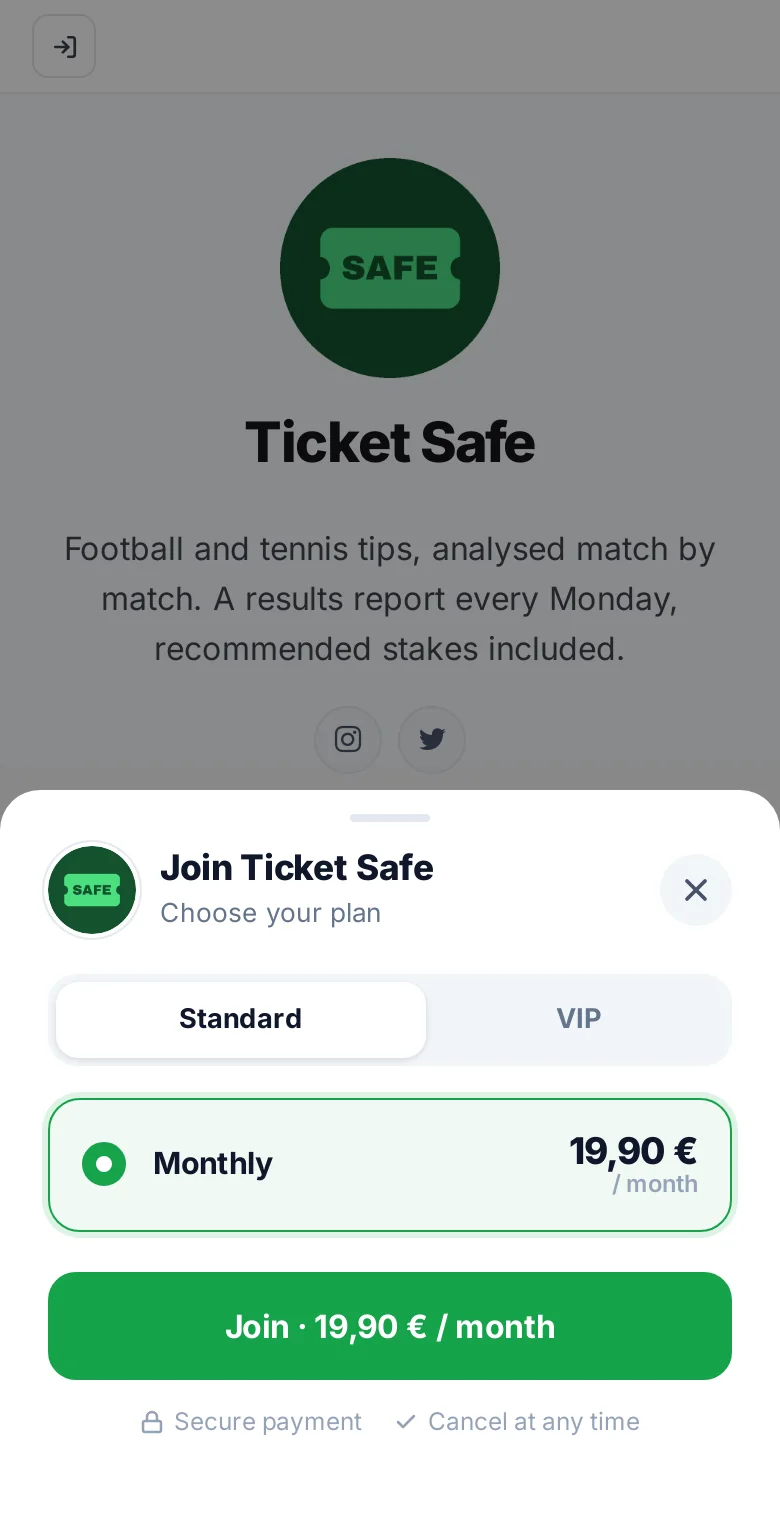
A simple offer: Standard and VIP
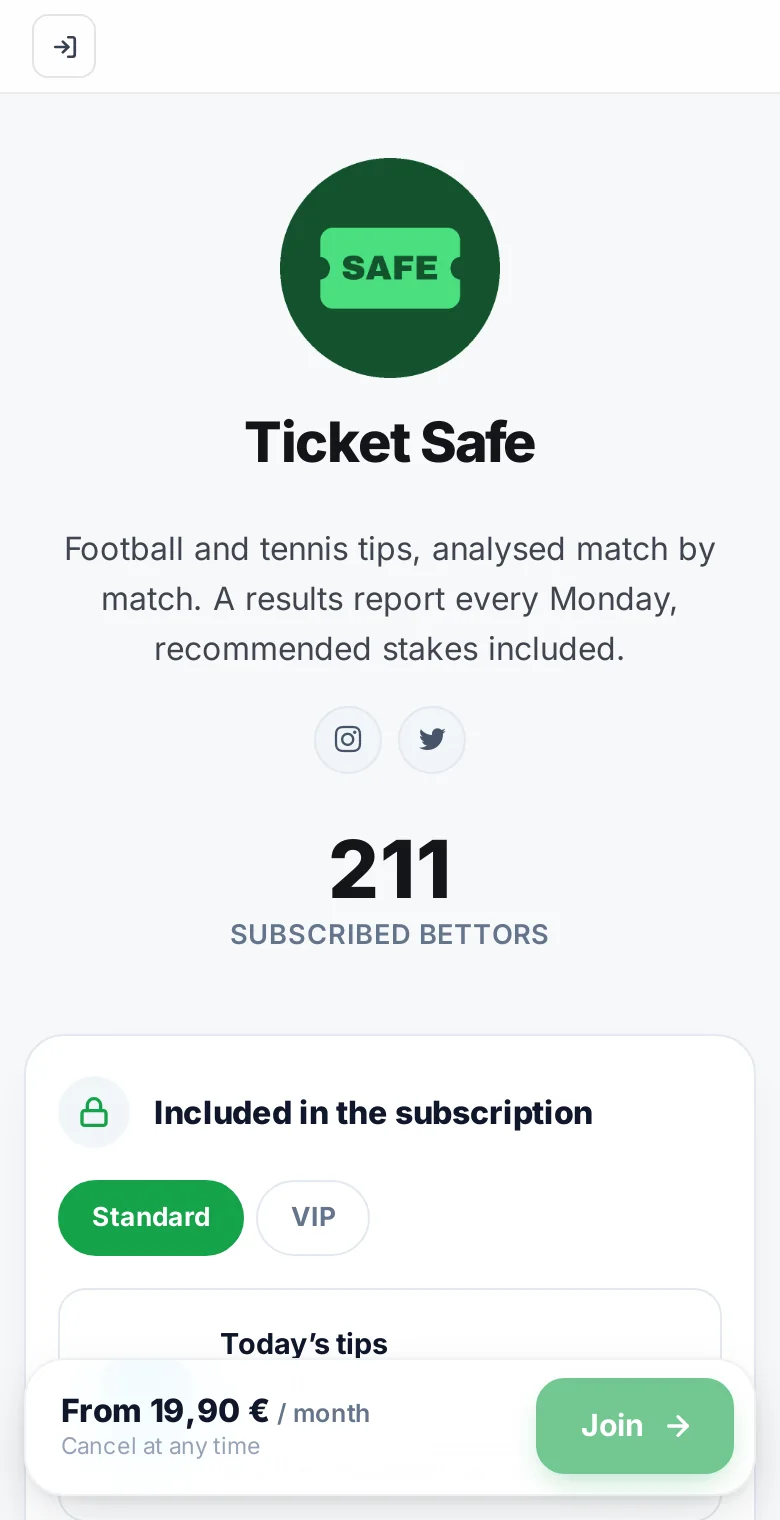
For example, a sports tips page with two plans. Visitors see at a glance what they get, then open the plan picker to compare and pay.
Three plans, Telegram and Discord
For example, a trading page with three plans (Analysis, Signals, VIP room). Each plan opens a different level of access, and the most expensive one includes everything the others give.
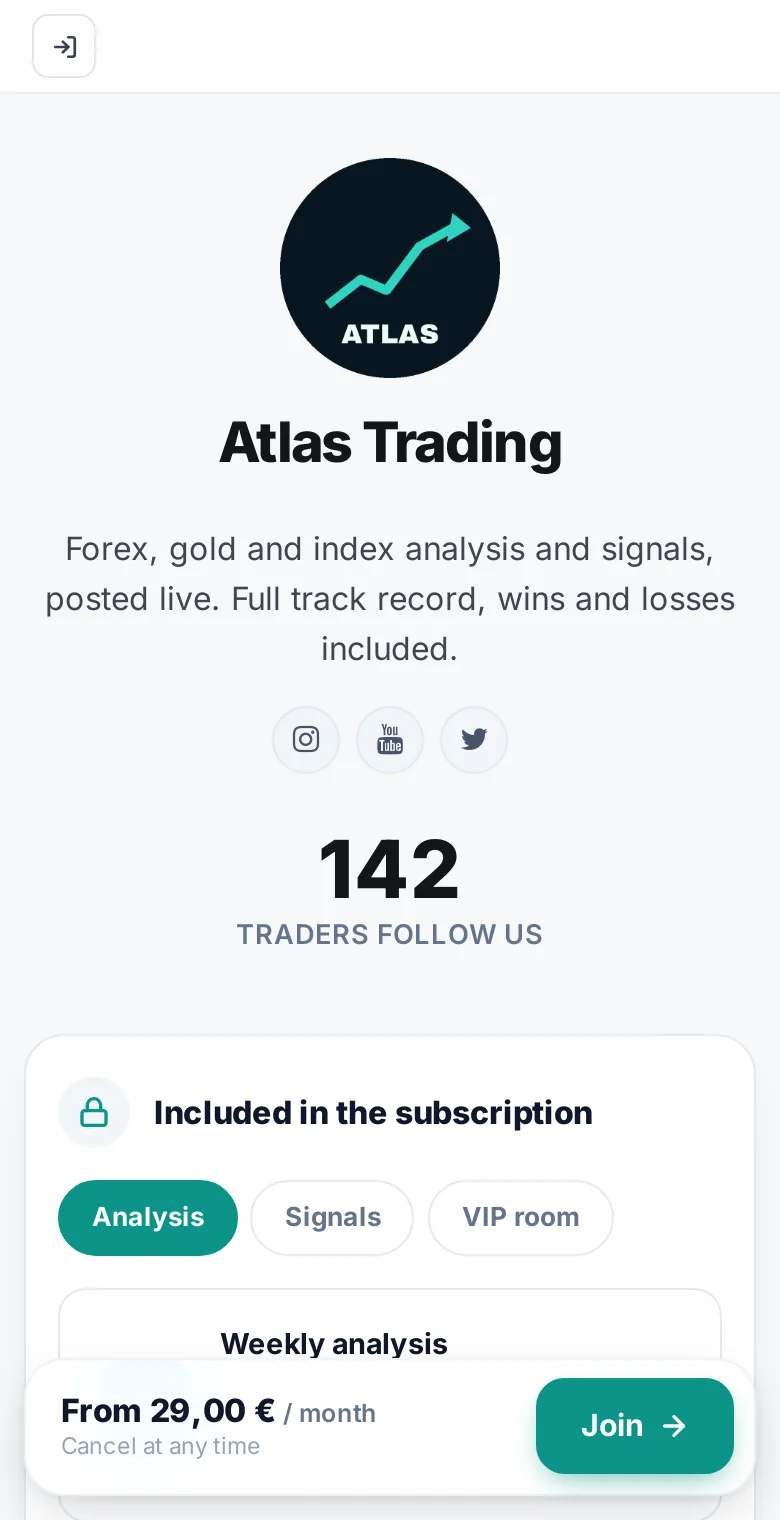
What to take from these examples: say exactly what people get (“3 tips a day”, “signals with entry and stop-loss”), show your past results without hiding the bad ones, and stick to two or three plans. Subscribers can start on the cheapest and switch plan themselves later. You’ll find more ideas in the Onesub page showcase.
7 mistakes to avoid
- Putting your only channel behind a paywall.Keep a free channel as your shop window: that’s what brings in your future subscribers. The paid channel comes next.
- Leaving the channel public.Anyone can join a public channel. Your paid channel has to be private.
- Managing access by hand for too long.At 50 subscribers, you spend the start of every month checking payments instead of creating content.
- Being vague about what people get.“Exclusive content” doesn’t sell anything. “3 tips a day with analysis” or “1 guided session every morning” does.
- Posting less once they’ve paid.A subscriber who sees nothing for a week cancels. Pick a posting rhythm and stick to it.
- Promising guaranteed returns.In trading or sports betting, it’s prohibited and it wrecks your credibility. Show your past results, honestly.
- Forgetting to declare your income.Set up a business status as soon as you make your first sales (in France, a micro-entreprise is enough to start). You’ll sleep better.
Frequently asked questions
Paid channels (some people call them “Telegram subs”) are still new to a lot of creators. Here are the questions we get asked most. Got another one? Message the founder directly on Telegram, or see every feature on the Onesub homepage.
Is it legal to run a paid Telegram channel?
Yes. Selling access to content you create is perfectly legal, as long as that content follows the law and Telegram’s rules. The income has to be declared: in France, for example, most creators start out as a micro-entrepreneur, a status you can register for free online.
How much does it cost to set up a paid Telegram channel?
Creating the channel on Telegram is free. With Onesub, there’s no monthly fee to get started: Onesub takes 5% of your sales, plus Stripe’s payment fees. As your revenue grows, the Premium (€49/month, 3%) and Pro (€99/month, 1%) plans let you keep more.
How much can you make with a paid Telegram channel?
It depends on your price and how many subscribers you have. 100 subscribers at €9.99 a month comes to about €910 kept every month after the Onesub fee and Stripe costs. 150 subscribers at €29 a month is about €4,100 kept. A realistic goal to start with: convert 1 to 5% of your free audience.
Telegram channel or group: which one should be paid?
A channel is for broadcasting: only you post, your subscribers read. A group is for conversation: everyone can write. For signals, betting tips or exclusive content, go with a channel. For coaching or peer support, go with a group. With Onesub, you can link both to the same offer.
What happens when a subscriber stops paying?
With Onesub, Stripe automatically retries failed payments. If the subscription ends up cancelled, the subscriber is removed from your Telegram channel on their own. If they cancel themselves, they keep access until the end of the period they paid for. There’s nothing for you to keep an eye on.
How do I get paid by my subscribers?
You connect your own Stripe account in a few minutes, with an ID and your bank details. Every payment lands directly in your Stripe account, then gets paid out automatically to your bank account. Onesub never holds your money.
Can I offer a free trial or a promo code?
Yes. You can give a few days of free trial so people can try your channel, or create promo codes (for example 20% off for your launch), with an expiry date or a maximum number of uses. That’s often what wins over the people on the fence.
Can I turn an existing Telegram channel into a paid one?
Yes, but the most effective approach is to keep your current channel free as a shop window and create a separate private channel for subscribers. Your free channel keeps bringing people in, and you use it to promote your VIP channel.
Telegram Stars or Onesub: which should I pick?
With Onesub, your subscribers pay by card in euros, straight into your own Stripe account. You can offer several plans, quarterly or yearly prices, promo codes and free trials, and you get a sales page to share. Telegram Stars, if a single monthly price in Stars is enough for you: nothing to set up, but your subscribers have to buy Stars first and you get paid in crypto.
Can I offer several plans with different channels?
Yes. You might create a Standard plan and a VIP plan, each with its own prices (monthly, quarterly, yearly) and its own channel or group. A higher plan also gets everything the plans below it unlock.